Electric vehicles (EVs) are no longer the future—they’re the present. With global EV sales surging past 14 million units annually, one critical question is gaining urgency: what happens to EV motors at the end of their life?
At the heart of every electric vehicle motor lies high-purity copper—a strategic material essential for electrification, renewable energy, and grid expansion. Recycling this copper efficiently isn’t just good business; it’s mission-critical for sustainability, cost control, and supply security.
So, how is the copper in electric vehicle motors recycled using motor recycling equipment?
Understanding EV Motor Composition
Before recycling begins, it’s crucial to understand what’s inside an EV motor.
A typical EV motor contains:
- Copper windings (stators & rotors)
- Electrical steel laminations
- Aluminum housings
- Insulation varnish and resins
Key statistic: Copper accounts for 10–20% of an EV motor’s total weight, and recycled copper retains up to 99.9% conductivity, equal to virgin copper.
That’s why motor recycling equipment focuses heavily on copper liberation and purity.
The 6-Step Process: How EV Motor Copper Is Recycled
1. Motor Cutting or Shearing
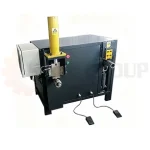
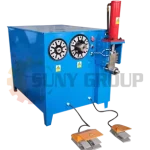
Heavy-duty motor cutting machines or hydraulic shears slice motors into manageable sections.
This exposes copper windings and breaks structural bonds.
✅ Faster access
✅ Reduced energy consumption in shredding
✅ Improved copper liberation
3. Industrial Shredding: The Liberation Phase
Next, motors enter high-torque industrial shredders, where they are reduced into smaller fragments.
At this stage:
Copper separates from steel laminations
Insulation begins to detach
Material becomes processable for physical separation
💡 Pro insight: Multi-shaft shredders outperform single-shaft systems for EV motors due to complex internal structures.
4. Magnetic Separation: Removing Steel
Powerful overband or drum magnets remove ferrous metals like silicon steel laminations.
This step:
Protects downstream equipment
Increases copper purity
Enables clean steel recycling as a by-product
♻️ Sustainability win: Steel recovery rates often exceed 98%.
5. Granulation and Milling
Remaining material enters copper granulators or turbo mills, reducing it to fine particles.
The goal?
👉 Fully liberate copper from varnish, resins, and plastics.
Well-designed granulation systems can achieve:
Uniform particle size
Minimal copper loss
Consistent downstream separation
6. Air Separation & Density Sorting
Using air tables, zig-zag classifiers, or vibration separators, lighter materials (plastics, insulation) are removed.
Copper, being heavier, drops cleanly into collection bins.
📈 Result: Copper purity levels of 99–99.6%, suitable for smelting or direct resale.
7. Dust Collection & Environmental Control
Modern motor recycling equipment integrates:
Pulse-jet dust collectors
Noise reduction systems
Fully enclosed processing lines
This ensures compliance with environmental and workplace safety standards while maintaining operational efficiency.
Frequently Asked Questions (FAQs)
Is recycled EV motor copper as good as new copper?
Yes. Properly processed recycled copper retains nearly identical electrical conductivity to virgin copper.
Can permanent magnet motors be recycled?
Absolutely. Advanced systems can separate:
- Copper
- Steel
- Aluminum
Rare earth magnets (with specialized lines)
What is the copper recovery rate?
High-quality motor recycling equipment typically achieves 95–99% copper recovery.
Is EV motor recycling profitable?
Very. With copper prices remaining strong, ROI periods for industrial recycling lines can be under 24 months.
How automated is the process?
Modern systems are highly automated, reducing labor costs and improving consistency.
As electric vehicles dominate global transportation, EV motor recycling is no longer optional—it’s inevitable.
By using advanced motor recycling equipment, recyclers can:
- Recover high-value copper efficiently
- Reduce dependence on mining
- Meet ESG and regulatory demands
- Build a resilient, future-ready recycling business
If copper is the lifeblood of electrification, motor recycling equipment is the heart that keeps it circulating.