Electric motors are everywhere—from household appliances to industrial production lines. But when these motors reach the end of their life, disassembling them manually is slow, unsafe, and expensive. That’s where electric motor disassembly machines come in.
If you’re involved in motor recycling, copper recovery, e-waste processing, or metal separation, understanding the electric motor disassembly machine procedure isn’t just useful—it’s critical to maximizing profit and efficiency.
In this guide, we’ll walk you through a clear, step-by-step procedure, answer the most common questions, and share insider insights used by high-performing recycling plants. By the end, you’ll know exactly how these machines work, why they matter, and how to get the most value from them.
What Is an Electric Motor Disassembly Machine?
An electric motor disassembly machine is specialized equipment designed to automatically or semi-automatically separate motor components, including:
- Copper windings
- Steel stators
- Aluminum housings
- Rotors and shafts
Compared to manual dismantling, these machines can increase processing speed by 3–5x while significantly reducing labor risks.
According to industry estimates, copper recovery rates can exceed 98% when using modern motor disassembly systems—far higher than traditional manual methods.
Why the Procedure Matters More Than You Think?
Many operators focus only on buying the machine. Big mistake.
The procedure—how you feed, process, and separate motors—directly affects:
- Recovery purity
- Equipment lifespan
- Energy consumption
- Worker safety
- Overall ROI
A poorly executed procedure can reduce copper yield by 10–15%, which adds up fast at scale.
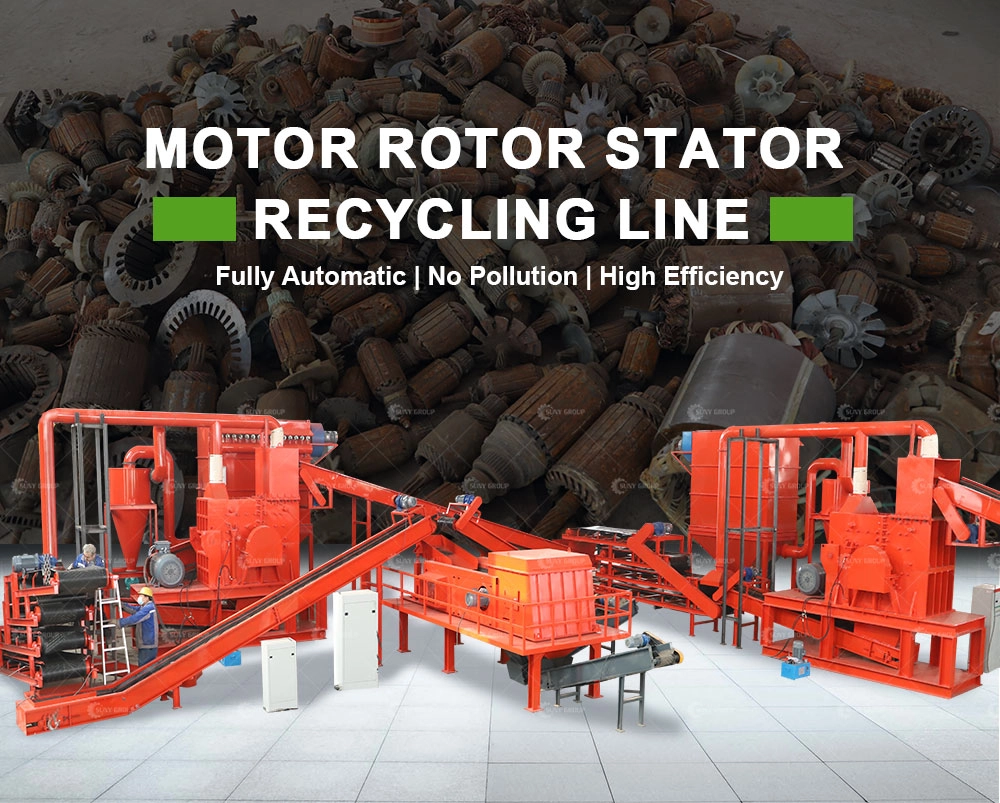
electric motor disassembly machine procedure
Electric Motor Disassembly Machine Procedure
Step 1: Motor Classification and Pre-Sorting
Before anything touches the machine, motors must be sorted by:
- Size and weight
- AC vs DC motors
- Presence of gearboxes
- Single-phase or three-phase
👉 Why it matters: Mixed motor sizes can cause jams or uneven disassembly.
Pro tip: Pre-sorting improves throughput by up to 20%.
Step 2: External Component Removal
Large motors often have external parts such as:
- Fans
- Terminal boxes
- Plastic covers
These are removed manually or via auxiliary stripping machines.
This step protects the core disassembly system from unnecessary wear.
Step 3: Motor Housing Splitting
The motor is fed into the disassembly machine, where hydraulic or mechanical splitting tools crack open the housing.
Cast iron shells break cleanly
Aluminum housings separate without contaminating copper
⚠️ Precision pressure control is critical here to avoid damaging windings.
Step 4: Rotor and Stator Separation
Once the housing opens, the machine pulls out the rotor from the stator.
This step is the heart of the electric motor disassembly machine procedure.
Modern systems use:
- Hydraulic pulling arms
- Linear push-out mechanisms
This minimizes copper loss and deformation.
Step 5: Stator Cutting or Expanding
To release copper windings, the stator undergoes one of two processes:
- Stator cutting (using blades or milling tools)
- Stator expansion (forcing windings outward)
Expansion methods are increasingly popular because they:
- Preserve copper length
- Reduce dust
- Lower blade maintenance costs
Step 6: Copper Winding Extraction
Now the valuable part—copper recovery.
The machine extracts windings in bundles or strips, depending on design.
High-quality systems achieve:
- ≥98% copper purity
- Minimal steel residue
This dramatically increases copper resale value.
Frequently Asked Questions (FAQs)
Is an electric motor disassembly machine fully automatic?
Some are fully automatic, while others are semi-automatic. Fully automatic systems cost more but require fewer operators.
What motor sizes can these machines handle?
Most machines handle motors from 0.5 kg to 200 kg, with industrial models capable of even larger units.
How fast is the process?
A single machine can process 1–3 tons per hour, depending on motor type.
The electric motor disassembly machine procedure isn’t just a technical checklist—it’s a profit blueprint.
By following a structured, optimized process, you can unlock higher copper yields, safer operations, and long-term equipment reliability. Whether you’re scaling a recycling plant or upgrading from manual dismantling, mastering this procedure puts you miles ahead of the competition.