Electric vehicles (EVs) are no longer the future—they’re the present. With global EV sales surpassing 14 million units annually and growing fast, a quieter but critical challenge is emerging: what happens to electric vehicle motors at end-of-life?
At the heart of every EV motor lies high-purity copper—sometimes up to 10–25 kg per motor. Copper is expensive, energy-intensive to mine, and increasingly strategic. That’s where electric vehicle motor recycling equipment steps in.
How Electric Vehicle Motor Recycling Equipment Extracts Copper
Step 1: Motor Dismantling – Starting with Precision
The copper extraction journey begins with safe and efficient motor dismantling.
Modern EV motor recycling equipment uses:
- Hydraulic dismantlers
- Automated cutting systems
- Intelligent fixture positioning
- These machines separate:
- Aluminum housings
- Steel shafts
- Permanent magnets (in some motors)
👉 Why this matters: Proper dismantling prevents copper contamination and increases recovery purity later in the process.
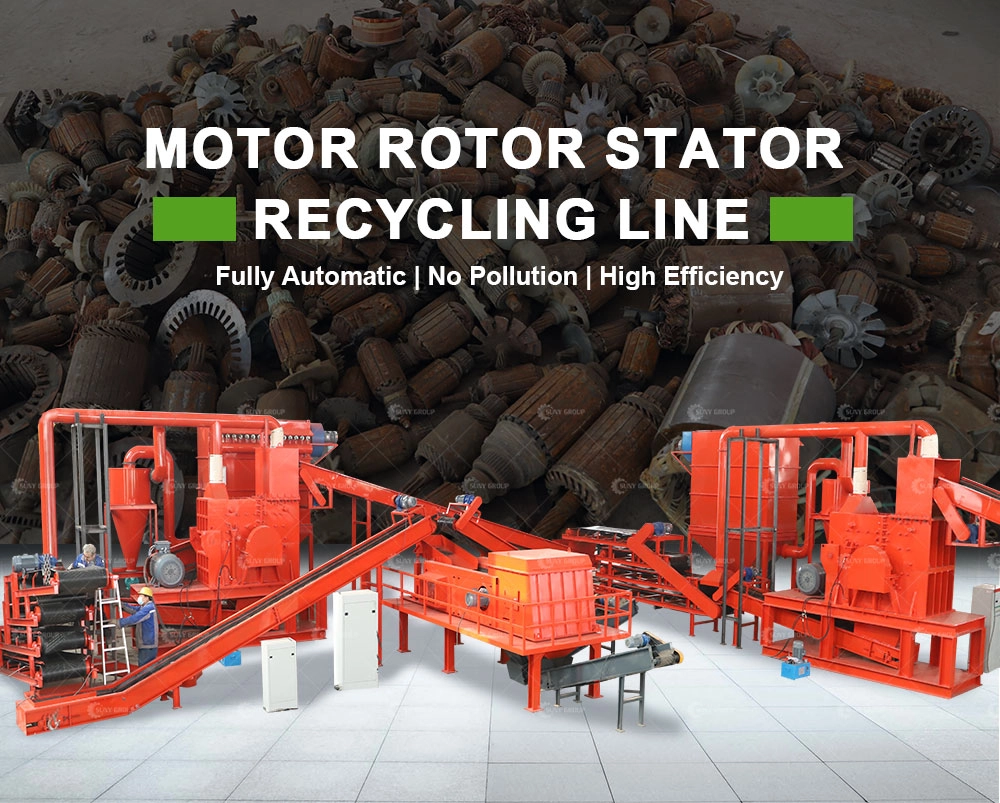
electric vehicle motor recycling equipment
Step 2: Primary Crushing – Breaking the Structure, Not the Value
Once dismantled, the motor stator and rotor enter a primary crusher or shredder.
The goal here is liberation, not pulverization.
Low-speed, high-torque shredders
Controlled output size (30–50 mm)
Minimal heat generation
🔑 Key insight: Excessive heat can oxidize copper. High-end recycling equipment avoids that, protecting copper quality.
Step 3: Secondary Crushing & Granulation – Freeing the Copper
Next comes fine crushing or granulation, where copper windings are fully released from:
- Silicon steel sheets
- Insulation varnish
- Composite materials
- Advanced EV motor recycling lines use:
- Hammer mills
- Turbo granulators
- Multi-stage size reduction
By the end of this stage, copper exists as clean granules, no longer locked inside steel.
Step 4: Magnetic Separation – Removing Steel Automatically
With materials liberated, magnetic separators take over.
These systems:
- Remove silicon steel laminations
- Extract iron residues
- Protect downstream equipment
✔️ Result: A non-magnetic fraction rich in copper and non-ferrous materials.
This step alone can remove over 90% of steel content automatically.
Step 5: Air Separation – Lightweight vs Heavy Materials
Copper is heavy. Insulation dust is not.
Using airflow separation systems, EV motor recycling equipment:
- Blows away lightweight varnish fibers
- Removes plastic insulation
- Concentrates heavy copper granules
This process dramatically improves copper purity while keeping energy consumption low.
Step 6: Eddy Current Separation – Copper vs Aluminum
Some EV motors contain both copper and aluminum windings. To separate them, eddy current separators are used.
How it works:
- Rotating magnetic fields
- Conductivity differences
- Precise trajectory control
📊 Industry data: Advanced eddy current systems can achieve 98–99% copper purity, meeting smelter-grade requirements.
Step 7: Final Refinement & Collection – Ready for Market
The final copper output is:
- Granular or wire-like
- High purity
Free from oil, varnish, and steel
Collected copper can be:
- Sold directly to smelters
- Reused in new motor manufacturing
- Exported as high-value recyclable material
💰 Economic fact: Recycled copper uses 85% less energy than primary copper mining—making it both profitable and sustainable.
Frequently Asked Questions (FAQs)
How much copper can be recovered from an EV motor?
Depending on motor type, 98% copper recovery is achievable with modern recycling equipment.
Is EV motor copper recycling environmentally friendly?
Yes. Recycling reduces CO₂ emissions by up to 65% compared to mining, while cutting landfill waste.
Can one recycling line handle different motor sizes?
High-quality systems are modular and adjustable, handling motors from hybrids, EVs, industrial drives, and traction motors.
Is manual labor still required?
Minimal. Most modern EV motor recycling equipment is semi- or fully automated, reducing labor cost and safety risks.
Electric vehicle motor recycling equipment extracts copper through a precise, multi-stage process—from dismantling and crushing to magnetic, air, and eddy current separation.
The result?
- High-purity copper
- Lower environmental impact
- Strong economic returns
As copper demand surges and EVs reach end-of-life, those who master copper extraction technology will lead the next industrial cycle.