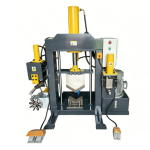
Scrap electric motors are more than waste. Inside their steel housings are valuable copper windings and other recyclable metals. The challenge is removing those materials efficiently without relying on slow, labor-intensive manual dismantling.
That is where a multifunctional motor recycling machine can make a major difference. SUNY GROUPS 5-in-1 Motor Copper Extraction Machine combines motor casing cutting, stator splitting, and three different copper extraction methods in one hydraulic system. The result is a compact solution designed to make scrap motor recycling more efficient and practical for professional recyclers.
But what exactly are the five functions, and why does combining them matter? Let us take a closer look.
Why Is a Multifunctional Motor Recycling Machine Needed?
Traditional scrap motor recycling often depends heavily on manual dismantling or several separate machines. That can increase handling time, labor requirements, and the amount of material movement between processing stages.
A multifunctional design takes a different approach. Instead of moving a motor from one independent machine to another, several key operations are integrated into a single platform.
For recyclers, this can mean a more streamlined workflow:
Motor feeding → casing cutting → stator splitting → copper extraction → material collection
The SUNY 5-in-1 system was developed around this integrated approach, with a centralized electric control system and hydraulic drive designed for heavy-duty motor dismantling.
What Are the 5 Functions of the Motor Recycling Machine?
The most important feature of this electric motor recycling equipment is its combination of five major processing functions.
1. Motor Wire Cutting
The first operation prepares the motor for efficient dismantling.
A modular blade system is used to cut the motor structure and expose the internal components. The machine uses a smaller blade to open the motor casing before moving to the larger cutting stage.
This step is important because preparing the housing correctly makes the next stage—stator splitting—much easier.
For recycling businesses, controlled cutting can also help reduce unnecessary force and make the overall dismantling process more consistent.
2. Motor Casing Cutting
Motor housings can be difficult to open manually, particularly when processing large quantities of scrap motors.
The 5-in-1 machine uses a 250 × 320 mm working blade and hydraulic power to cut the casing efficiently. Its hydraulic system can reach 25 MPa working pressure, with a reported 30-ton cutting force.
By mechanically opening the casing, operators can gain direct access to the stator and copper windings.
3. Stator Splitting
After the motor casing is opened, the stator needs to be separated so the copper windings can be removed.
The machine uses a larger blade to split the stator into two sections, exposing the internal copper wires. This is one of the key stages in the motor recycling machine workflow because it prepares the stator for mechanical copper extraction.
Instead of dismantling every stator manually, operators can use controlled hydraulic force to accelerate the process.
4. Copper Extraction by Gripping or Pushing
Not every motor stator has the same dimensions. That is why the machine provides different extraction methods.
For smaller stators, the gripping method is designed for units with an inner diameter of approximately 50 mm and an outer diameter up to 120 mm.
For medium-sized stators, the pushing mechanism covers inner diameters starting around 50 mm and outer diameters up to approximately 300 mm, with a 200 mm pushing stroke.
This flexibility allows one machine to process different scrap motor sizes instead of forcing operators to use the same extraction technique for every motor.
5. Copper Extraction by Pulling
Large stators require a different approach.
The pulling mechanism is designed for stators with outer diameters from approximately 300 mm to 600 mm, with a 600 mm pulling stroke. For stators with thick insulation, heating can improve the extraction process.
This final function is especially useful for recyclers dealing with a wider range of scrap motor designs.
The key advantage is not simply having five functions. It is the ability to choose the appropriate extraction method according to the stator size and structure.
How Does the 5-in-1 Machine Improve Scrap Motor Recycling?
The biggest advantage is integration.
Instead of purchasing multiple individual machines for casing cutting, stator splitting, and copper extraction, the 5-in-1 configuration brings these operations together.
That can provide several practical benefits.
Less Manual Dismantling
Mechanical processing reduces the amount of repetitive physical work required from operators. This can be particularly valuable for businesses processing scrap motors in batches.
More Consistent Processing
Hydraulic cylinders and controlled strokes provide a more repeatable dismantling method than completely manual processing.
Better Copper Recovery Workflow
The machine is designed specifically around exposing and extracting copper windings from stators. According to SUNY GROUP, its controlled mechanical extraction is intended to reduce wire breakage and leftover copper caused by rough dismantling.
Compact Integrated Design
The complete machine measures approximately 1400 × 1300 × 1700 mm and weighs around 650 kg, making the system relatively compact for a machine combining several operations.
What Are the Main Technical Specifications?
For buyers comparing electric motor recycling machines, technical specifications matter as much as the number of functions.
The SUNY 5-in-1 machine features:
- Motor power: 5.5 kW
- Voltage: 380 V / 50 Hz
- Hydraulic pressure: 25 MPa
- Oil tank capacity: 80 L
- Cutting force: 30 tons
- Cylinder stroke: 400 mm
- Working width: 450 mm
- Machine size: 1400 × 1300 × 1700 mm
- Machine weight: 650 kg
These specifications give recyclers a useful starting point when evaluating whether the machine is suitable for their operating environment and scrap motor types.
What Types of Scrap Motors Can It Process?
One of the most important questions buyers ask is whether a scrap motor recycling machine can handle their specific feedstock.
The answer depends on motor dimensions and construction.
The 5-in-1 machine provides multiple extraction methods for different stator sizes, including gripping, pushing, and pulling. This gives it a wider working range than a single-method extraction machine. The manufacturer specifies extraction ranges from compact stators around 120 mm outer diameter to large stators up to approximately 600 mm outer diameter.
However, recyclers should still provide actual motor samples, photos, dimensions, or videos before purchasing equipment. This is the best way to confirm compatibility.
Is a 5-in-1 Motor Recycling Machine Worth It?
For businesses handling mixed scrap motors, the answer can be yes—especially when labor costs and equipment footprint are important considerations.
A single multifunctional unit can simplify the processing layout while reducing the need to transfer motors between different machines.
More importantly, it gives operators several ways to extract copper depending on motor size. That flexibility can become a major advantage when incoming scrap is inconsistent.
However, the best equipment choice should always be based on your actual feedstock, required processing volume, motor dimensions, available power supply, and desired output quality.
Frequently Asked Questions
How many functions does the machine provide?
The machine is marketed as a 5-in-1 motor copper extraction solution, combining casing cutting, stator splitting, and three extraction approaches: gripping, pushing, and pulling.
Can it process large motor stators?
Yes. The pulling system is specified for stators with outer diameters of approximately 300–600 mm. Thick insulation may require heating to improve extraction.
What is the machine power?
The machine uses a 5.5 kW motor and operates at 380 V / 50 Hz.
Does the machine completely recycle a motor?
The 5-in-1 machine focuses primarily on motor dismantling and copper extraction. Additional equipment may be required if a recycling plant needs further processing or separation of all recovered materials.
What should I provide when requesting a quotation?
Provide the motor types you process, approximate motor dimensions, expected capacity, power supply, and photos or videos of representative scrap motors. This allows the supplier to recommend a more suitable configuration.
Conclusion
A 5-in-1 multifunctional motor recycling machine offers a practical way to simplify scrap motor processing by bringing several critical dismantling operations into one hydraulic platform.
Its combination of casing cutting, stator splitting, gripping, pushing, and pulling gives recyclers greater flexibility when working with motors of different sizes. With a 30-ton cutting force, 25 MPa hydraulic pressure, and three copper extraction methods, the machine is designed for efficient mechanical dismantling and copper recovery.
For recycling businesses looking to reduce manual work, streamline equipment layout, and improve the copper extraction workflow, a multifunctional system deserves serious consideration.
The smartest next step is simple: compare your actual scrap motor sizes and processing volume with the machine specifications before making an investment.