Electric motors are everywhere—inside air conditioners, washing machines, EVs, industrial equipment, and factory lines. When these motors reach the end of their life, they don’t become “waste.” They become valuable scrap packed with copper, aluminum, steel, and iron.
Yet here’s the problem:
many recyclers still rely on manual dismantling, losing time, money, and material purity.
That’s where a motor dismantling machine changes everything.
What Is a Motor Dismantling Machine?
A motor dismantling machine is specialized recycling equipment designed to automatically or semi-automatically separate electric motors into their core materials, including:
- Copper windings
- Aluminum rotors
- Steel stators
- Iron housings
Instead of hammering, burning, or cutting motors by hand, the machine precisely dismantles them with controlled force and mechanical separation.
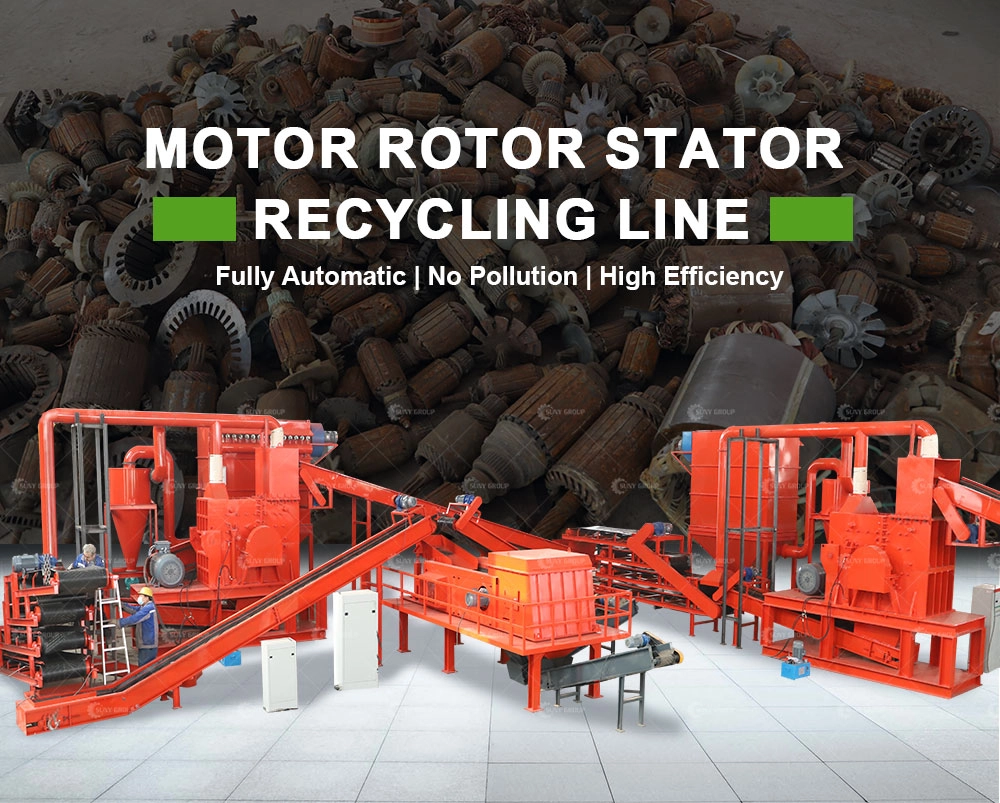
Electric motor stator scrap recycling line solutions
👉 Result: cleaner materials, higher resale value, and safer operations.
Is it worth taking apart electric motors for scrap?
Let’s talk numbers.
Copper prices remain one of the highest among recyclable metals
An average industrial motor contains 8–25% copper by weight
Clean copper scrap can sell for 2–4× more than mixed scrap
According to industry data, automated motor recycling can increase copper recovery rates by up to 30% compared to manual dismantling.
That’s real money left on the table if you’re not using the right equipment.
How to Recycle Electric Motors Using a Motor Dismantling Machine?
1. Pre-Treatment: Remove External Components
Before feeding motors into the dismantling machine, remove:
- Plastic covers
- Cooling fans
- Terminal boxes
This simple step improves separation accuracy and protects the machine.
2. Feed Motors into the Motor Dismantling Machine
The motor dismantling machine applies controlled mechanical force to split:
- Stator from housing
- Rotor from shaft
- Windings from iron core
3. Automatic Separation of Copper, Aluminum, and Steel
Once dismantled:
- Copper windings are extracted cleanly
- Aluminum rotors are separated
- Steel stators and housings are isolated
This results in high-purity material streams, ready for resale or further processing.
4. Secondary Processing (Optional but Powerful)
For maximum profit, recyclers often combine dismantling machines with:
- Copper granulators
- Eddy current separators
- Magnetic separators
This hybrid setup ensures near-zero contamination and premium-grade scrap output.
Frequently Asked Questions (FAQ)
Can all electric motors be recycled using a dismantling machine?
Most AC and DC motors—from household to industrial sizes—can be processed. Very small motors may require batch processing, while oversized motors may need pre-cutting.
Is a motor dismantling machine better than a shredder?
Yes—for value recovery.
Shredders mix materials, reducing purity. Dismantling machines separate before destruction, delivering cleaner copper and higher profits.
How much copper can I recover from electric motors?
Typically 10–25% by weight, depending on motor type. Industrial motors often contain the highest copper concentration.
Is motor recycling environmentally friendly?
Absolutely. Recycling copper uses up to 85% less energy than mining new copper, significantly reducing carbon emissions.
What skills are needed to operate a motor dismantling machine?
Most modern machines are operator-friendly, requiring minimal training. Automated controls reduce labor dependence and error rates.
If you’re serious about recycling electric motors efficiently, safely, and profitably, a motor dismantling machine is no longer a luxury—it’s a necessity.
By following the steps outlined above, you can:
- Recover more copper
- Reduce operational costs
- Improve material purity
Scale your recycling business confidently